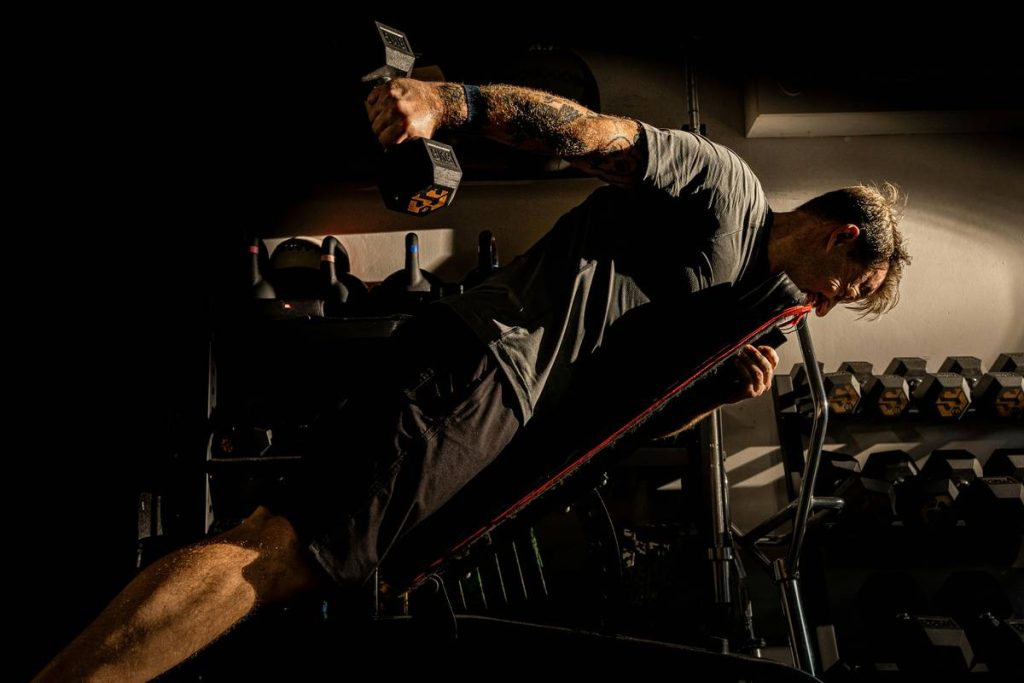
Ever wake up feeling like your body creaks louder than your garage door on a winter morning? You hit the gym consistently—maybe even grind out cardio five days a week—yet your jeans still fit tighter, your energy dips by 3 p.m., and that six-pack you once flirted with has ghosted you permanently.
Here’s the hard truth: fitness ≠ strength. And if you’re a man over 40 chasing general “fitness” without prioritizing strength training, you’re fighting biology—and losing.
In this post, we’ll cut through the noise and answer the #1 question men in their 40s, 50s, and beyond keep asking: “How often should I do strength training over fitness?” You’ll learn:
- Why muscle loss after 40 is accelerating faster than you think (and what to do about it)
- The scientifically backed sweet spot for weekly strength sessions
- Real-world routines that preserve joints, boost testosterone, and actually fit into a busy schedule
- One terrible piece of “bro advice” you need to ignore immediately
Table of Contents
- Key Takeaways
- Why Strength Training Trumps General Fitness After 40
- How Often Should Men Over 40 Do Strength Training?
- Best Practices for Safe & Effective Strength Routines
- Real Results from Guys Who Got It Right
- FAQs
Key Takeaways
- Men lose 3–8% of muscle mass per decade after 30—accelerating after 40 (NIH, 2020).
- Strength training 2–3 times/week is optimal for muscle retention, metabolic health, and longevity.
- Cardio alone won’t stop sarcopenia (age-related muscle loss)—progressive resistance training will.
- Recovery is non-negotiable: joints heal slower, hormones shift, and sleep quality impacts gains.
Why Strength Training Trumps General Fitness After 40
Let’s be brutally honest: “staying fit” sounds noble—but it’s dangerously vague. Running miles, cycling classes, or even daily walks feel productive… until you realize they don’t rebuild what time is stealing from you: lean muscle mass.
After 40, men experience sarcopenia—a gradual but relentless loss of skeletal muscle. According to the National Institutes of Health, we lose 3–8% of muscle mass each decade
- Slower metabolism → easier weight gain
- Poorer insulin sensitivity → higher diabetes risk
- Weaker bones → increased fracture risk
- Reduced functional independence as you age
I learned this the hard way. At 44, I was logging 5-mile runs four times a week—felt “fit,” wore compression socks like armor—yet couldn’t lift my suitcase overhead without shoulder pain. My doctor showed me DEXA scan results: my lean mass had dropped 11% in 7 years. That’s when I swapped “fitness” for *strength-first* programming. Six months later? Blood pressure normalized, waist shrank 3 inches, and I deadlifted more than my teenage self ever did.

How Often Should Men Over 40 Do Strength Training?
Forget bro-science. Here’s what the data says:
The American College of Sports Medicine (ACSM) recommends 2–3 full-body strength sessions per week for adults over 40, with at least 48 hours between sessions targeting the same muscle groups. Why not more? Because recovery becomes your new superpower.
Your testosterone, growth hormone, and collagen synthesis aren’t what they were at 25. Push too hard, too often, and you invite injury—not progress.
Optimist You:
“Two to three times a week? That’s manageable! I can do squats, push-ups, rows, and farmer’s carries—boom, full-body in 45 minutes.”
Grumpy You:
“Ugh, fine—but only if I can do it before the kids wake up and without touching a Smith machine. Those things are joint assassins.”
Here’s a realistic weekly split that works for 90% of guys over 40:
- Monday: Full-body strength (compound lifts: goblet squats, bench press, pull-ups)
- Wednesday: Active recovery (walking, foam rolling, mobility drills)
- Friday: Full-body strength (deadlifts, overhead press, bent-over rows)
- Weekends: Optional low-intensity cardio (hiking, swimming) or rest
Note: “Fitness” activities like jogging or spin class can complement this—but never replace it. Think of them as seasoning, not the main course.
Best Practices for Safe & Effective Strength Routines
You’re not 22. Your routine shouldn’t pretend you are. Follow these evidence-backed rules:
- Prioritize form over weight. One bad rep with heavy weight = 3 months on the couch.
- Use compound movements. Squats, deadlifts, presses, and rows recruit multiple muscles—maximizing efficiency and hormonal response.
- Progress slowly. Add 2.5–5 lbs per week to lifts, not 20. Consistency beats heroics.
- Sleep 7–8 hours nightly. Muscle repair happens during deep sleep—skimping sabotages gains.
- Hydrate + eat enough protein. Aim for 1.6–2.2g of protein per kg of bodyweight daily (ISSN, 2017).
⚠️ Terrible Tip to Avoid:
“Just lift until failure every set!” Nope. For men over 40, training to muscular failure increases cortisol and injury risk without boosting hypertrophy. Stop 1–2 reps shy of failure on most sets. Save failure for the last set of an exercise—if at all.
Real Results from Guys Who Got It Right
Meet David, 48, IT manager and former weekend warrior. For years, he did CrossFit 5x/week—until his rotator cuff said “nope.” He switched to a 2-day/week strength program focused on barbell basics, added daily walks, and dialed in sleep.
Results after 6 months:
- Lost 18 lbs of fat (no dieting, just protein + strength)
- Deadlift increased from 225 lbs → 315 lbs
- Blood pressure dropped from 145/92 → 122/78
- Zero shoulder pain
His secret? “I stopped trying to ‘get fit’ and started trying to stay strong. The rest followed.”
FAQs
Can I do strength training every day over 40?
No. Daily strength training without adequate recovery leads to overtraining, elevated cortisol, and joint degradation. Stick to 2–3 full-body sessions weekly with rest or active recovery in between.
Is cardio completely useless after 40?
Not useless—but secondary. Cardio supports heart health and mood, but it doesn’t reverse muscle loss. Prioritize strength first; add 2–3 moderate cardio sessions if you enjoy them.
How long until I see results from strength training over 40?
Strength gains often appear in 3–4 weeks. Visible body composition changes take 8–12 weeks with consistent training, protein intake, and sleep. Patience pays dividends.
Do I need a gym membership?
No. Bodyweight exercises (push-ups, pull-ups, lunges), resistance bands, and adjustable dumbbells work perfectly at home. Focus on progressive overload—not equipment.
Conclusion
If you’re a man over 40, “fitness” is a distraction. Strength is survival. Training 2–3 times per week with purposeful, compound-focused routines isn’t just about looking better—it’s about maintaining independence, metabolic health, and vitality for decades to come.
Stop burning calories on endless treadmills. Start building resilience with iron. Your future self—the one hiking with grandkids, lifting luggage effortlessly, and waking up without stiffness—will thank you.
Now go lift something heavy. Then go drink water. And maybe nap. (You’ve earned it.)
Like a 2004 Motorola Razr, simplicity wins. Flip open your potential—one rep at a time.