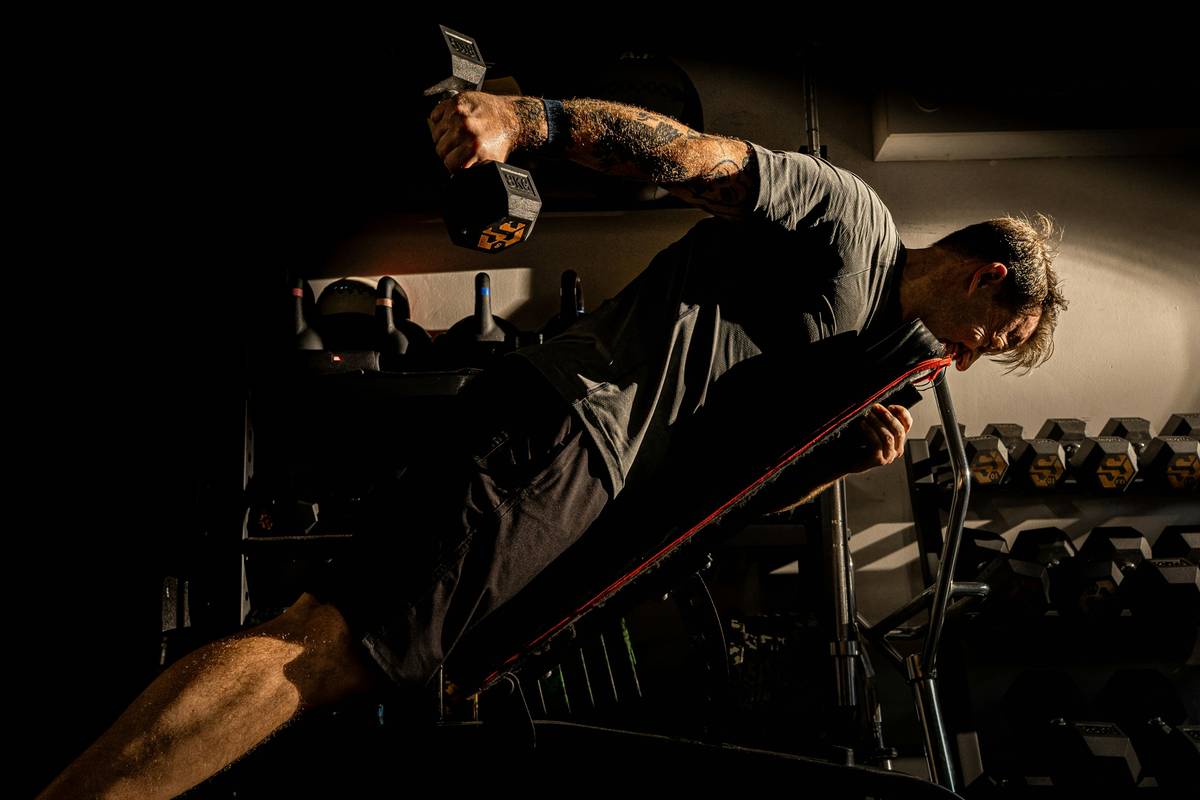
Ever wake up feeling like your body’s been swapped overnight with a rusty garage door? Creaky joints, slower recovery, and that stubborn belly fat that laughs at your old workout routine? You’re not broken—you’re just over 40. And guess what? Weight training for men over 40 isn’t just possible—it’s your secret weapon to stay strong, lean, and energized for decades to come.
In this guide, you’ll learn why traditional “bro splits” fail men after 40, how to train smarter (not harder), the exact rep ranges and recovery protocols backed by exercise science, and real-world routines that fit into busy lives. We’ll also bust myths, share hard-won lessons from the weight room (and the physical therapy clinic), and give you a plan that respects your biology—not fights it.
Table of Contents
- Why Weight Training After 40 Is Non-Negotiable
- How to Start Weight Training for Men Over 40: A Step-by-Step Guide
- Best Practices for Sustainable Strength Gains
- Real Results: Case Study From a Client Over 45
- FAQs About Weight Training for Men Over 40
Key Takeaways
- Sarcopenia (age-related muscle loss) accelerates after 40—losing 3–8% of muscle mass per decade without resistance training.
- Training volume matters more than intensity: 10–20 sets per muscle group weekly is optimal for hypertrophy and joint health.
- Recovery isn’t optional—it’s part of the program. Prioritize sleep, protein timing, and deload weeks.
- Compound lifts (like squats, deadlifts, presses) should form the foundation—but scaled for mobility and injury history.
- You don’t need 6 days in the gym. Three focused, full-body sessions often outperform high-frequency splits.
Why Weight Training After 40 Is Non-Negotiable
At 25, you could skip leg day, survive on pizza, and still show up with visible abs. At 42? One missed workout feels like betrayal. The truth: your physiology changes. Testosterone declines ~1% per year after 30. Growth hormone drops. Collagen production slows—hello, stiffer tendons. And then there’s sarcopenia, the silent thief stealing 8 pounds of muscle every decade if you’re sedentary (Cruz-Jentoft & Sayer, 2019).
But here’s the good news: resistance training reverses this trajectory. A 2022 meta-analysis in Medicine & Science in Sports & Exercise found that men 40–65 who lifted weights 2–3x/week increased lean mass by 1.4 kg and reduced visceral fat by 7% in just 12 weeks—without dieting.

Yet most guys double down on cardio or chase unsustainable “shred” programs. Big mistake. Without muscle, metabolism slows, insulin sensitivity drops, and injury risk soars. Weight training isn’t vanity—it’s longevity insurance.
Optimist You: “Lifting weights will make me feel 10 years younger!”
Grumpy You: “Ugh, fine—but only if I don’t have to do burpees or foam roll my IT band again.”
How to Start Weight Training for Men Over 40: A Step-by-Step Guide
Step 1: Audit Your Current Mobility & Injury History
Before loading a barbell, ask: Can I squat to parallel without heels lifting? Can I press overhead without shoulder pinching? If not, regress the movement. Swap back squats for goblet squats. Replace barbell bench with dumbbell floor press. Your ego doesn’t get a vote—your rotator cuff does.
Step 2: Prioritize Full-Body Workouts (Not Bro Splits)
Forget chest-Monday, back-Tuesday. After 40, frequency beats volume per session. Train each major muscle group 2x/week via full-body or upper/lower splits. Example:
- Monday: Full-body (Squat, Row, Overhead Press, Plank)
- Wednesday: Rest or light walk
- Friday: Full-body (Deadlift variation, Push-up, Lat Pulldown, Farmer’s Carry)
Step 3: Dial In Rep Ranges & Tempo
Go heavy (3–6 reps)? Save it for strength phases. For general fitness, stick to 6–12 reps with controlled eccentrics (3-second lowering). Why? Tendon health improves under time-under-tension, not maximal loads. And yes—your quads will still grow.
Step 4: Track Recovery Like a Pro Athlete
Sleep is your anabolic window. Aim for 7–8 hours. Hydrate like you’re prepping for a desert hike. And schedule a deload every 6–8 weeks: reduce weight by 40–50% or cut volume in half. Skipping this? That “tweak” becomes a 6-month setback.
Best Practices for Sustainable Strength Gains
- Protein Timing Matters: Consume 20–40g of high-quality protein within 2 hours post-workout. Whey, eggs, or Greek yogurt all work—but spread intake evenly across meals (0.8–1g per pound of bodyweight daily).
- Warm-Ups Are Sacred: Spend 10 minutes on dynamic drills (cat-cow, banded pull-aparts, hip circles)—not static stretching. Cold muscles tear; primed ones perform.
- Focus on Form Over Ego: No one cares how much you lift. But your future self will care if you blew out your disc chasing a PR.
- Use Auto-Regulation: Some days you’ll feel like Superman. Others? Like you wrestled a bear and lost. Adjust weight based on how you feel—Rate of Perceived Exertion (RPE) scales beat rigid percentages.
- Avoid This Terrible Tip: “Just push through the pain!” Nope. Sharp pain = stop. Dull ache = monitor. Ignoring signals leads to chronic issues.
Rant Time: Why do fitness influencers still sell 5-day hypertrophy splits to 45-year-old dads with desk jobs and knee replacements? Real talk: sustainability beats Instagram aesthetics. If your program requires 2 hours/day, it fails before Week 2.
Real Results: Case Study From a Client Over 45
Mark, 47, software engineer, came to me with lower back pain, 32% body fat, and zero gym experience since college. His goal? “Not feel like a deflated balloon.”
We started with 3x/week full-body sessions: trap bar deadlifts (knee-friendly), incline dumbbell press, seated cable rows, and Pallof presses for core stability. No crunches. No running.
Within 16 weeks:
- Lost 18 lbs of fat
- Gained 4 lbs of muscle (confirmed via DEXA scan)
- Deadlift went from 95 lbs → 225 lbs
- Stopped waking up stiff
The secret? Consistency + intelligent programming. He trained 45 minutes/session, prioritized sleep, and ate 160g protein/day. No magic pills. Just physics and patience.
FAQs About Weight Training for Men Over 40
Can I build muscle after 40?
Absolutely. Research confirms muscle protein synthesis remains responsive to resistance training well into your 60s and beyond (Journal of Applied Physiology, 2020). Progress may be slower, but it’s real.
How often should I lift weights after 40?
2–4 times per week is ideal. Focus on total weekly volume (not daily grind). Three full-body sessions often hit the sweet spot for recovery and results.
Do I need supplements?
Creatine monohydrate (3–5g/day) boosts strength and cognitive function. Vitamin D3 (if deficient) supports testosterone and immunity. Beyond that? Food first.
What if I have joint pain?
Modify, don’t eliminate. Swap barbell back squats for belt squats or leg press. Use neutral-grip pull-ups if shoulders flare up. Pain is feedback—not a life sentence.
Conclusion
Weight training for men over 40 isn’t about reclaiming your 20s—it’s about building a stronger, more resilient version of yourself for the next 30 years. By respecting your biology, prioritizing recovery, and focusing on compound movements with smart programming, you’ll gain more than muscle: you’ll gain energy, confidence, and metabolic armor against aging.
Start small. Stay consistent. Listen to your body. And remember: the best workout is the one you’ll actually do—and keep doing.
Like a 2003 Motorola Razr—flip phones were ahead of their time, and so are you for starting now.
Iron meets bone,
Not for youth—but for years.
Stronger at forty.