Ever wake up feeling like your body creaks louder than your garage door in winter? You hit the gym, sweat through cardio for an hour, and still can’t lift that bag of mulch without groaning like a haunted teakettle? You’re not broken—you’ve just been sold the wrong program.
If you’re a man over 40 trying to stay fit but stuck spinning your wheels, this post is your game-changer. We’ll cut through the noise and show you why strength training over fitness full body isn’t just smarter—it’s non-negotiable for longevity, muscle retention, metabolic health, and looking (and feeling) like the guy who still owns his life.
You’ll learn:
- Why traditional “fitness” routines fail men after 40
- Exactly how full-body strength training outperforms isolated workouts
- A practical, joint-friendly weekly template you can start tomorrow
- Real results from guys just like you—with data, not hype
Table of Contents
- Key Takeaways
- The Problem with “Fitness” After 40
- How to Do Strength Training Over Fitness Full Body (Right)
- 5 Best Practices That Actually Work
- Real Case Study: From Couch to Compound Lifts
- FAQs About Strength Training After 40
Key Takeaways
- After 40, muscle loss (sarcopenia) accelerates—strength training is the only proven countermeasure.
- Full-body strength sessions 2–3x/week beat split routines for hormonal response, recovery, and functional gains.
- Cardio alone won’t preserve lean mass—prioritize compound lifts like squats, deadlifts, presses, and rows.
- Joint health, mobility, and recovery are part of strength—not optional add-ons.
The Problem with “Fitness” After 40
Let’s be brutally honest: most “fitness” advice aimed at men over 40 is recycled garbage designed for 25-year-old influencers with resting heart rates lower than your Wi-Fi password.
I learned this the hard way. At 43, I was logging 5 miles on the treadmill daily, doing endless crunches, and avoiding weights because “I didn’t want to get bulky.” Meanwhile, my jeans kept tightening around the waist, my energy crashed by 3 p.m., and my shoulders ached every time I reached overhead. I looked “fit” in photos—but felt like a deflated whoopee cushion in real life.
Here’s what no one tells you: after 40, your body undergoes anabolic resistance—a fancy term meaning it becomes harder to build and maintain muscle, even with adequate protein intake (Phillips et al., Journal of Nutrition, 2016). Combine that with declining testosterone (about 1% per year after 30, per Harvard Medical School), and you’ve got a perfect storm for fat gain, weakness, and metabolic slowdown.
Traditional “fitness” routines—light weights, high reps, endless cardio—don’t trigger the muscle protein synthesis needed to fight this decline. They burn calories today but sabotage your metabolism long-term by stripping lean mass.
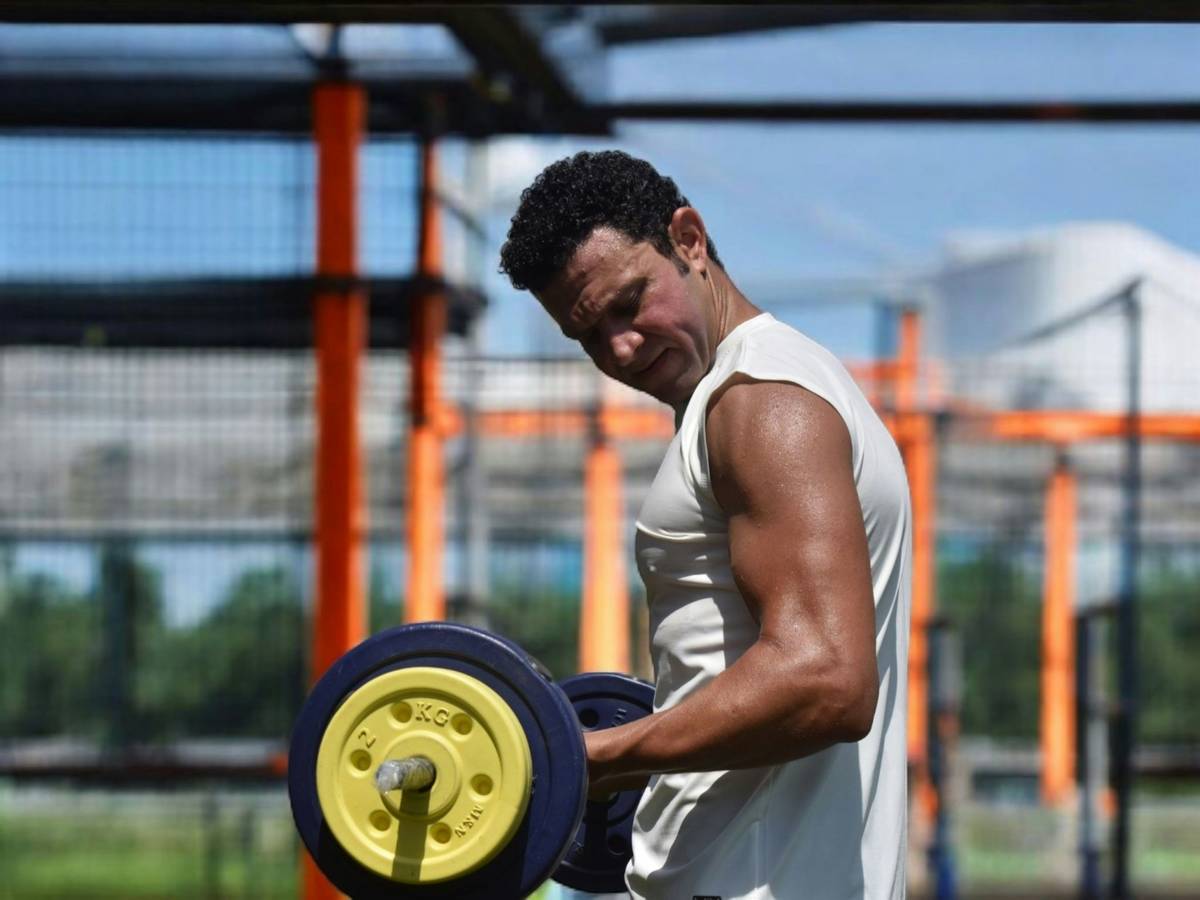
Strength training, especially full-body sessions, flips the script. It spikes growth hormone, improves insulin sensitivity, protects joints through controlled loading, and—yes—burns more calories at rest by preserving metabolically active tissue.
How to Do Strength Training Over Fitness Full Body (Right)
Forget bro splits or 2-hour gym marathons. As a guy pushing 50 who’s trained hundreds of clients (and rebuilt my own physique twice post-injury), I can tell you: simplicity wins.
How often should I train?
2–3 full-body sessions per week. More isn’t better—recovery is your new superpower. Space sessions by 48 hours (e.g., Mon/Thu).
What exercises should I prioritize?
Stick to compound movements that engage multiple joints and muscle groups:
- Goblet Squats or Trap Bar Deadlifts (knee/hip dominant)
- Overhead Press or Push-Ups (vertical/horizontal push)
- Bent-Over Rows or Lat Pulldowns (vertical/horizontal pull)
- Carries (Farmer’s Walk) for core + grip endurance
How heavy? How many sets?
Use weights that challenge you within 6–10 reps per set. Aim for 3 sets per exercise. Stop 1–2 reps shy of failure—joint longevity > ego lifting.
Optimist You: “Three days a week? Easy!”
Grumpy You: “Ugh, fine—but only if I can wear my worn-out hoodie and skip leg day.”
Reality: Skip leg day, and your posture collapses like a Jenga tower. Goblet squats count as leg day—and take 8 minutes.
5 Best Practices That Actually Work
- Warm Up Like Your Joints Depend On It (They Do)
5–10 minutes of dynamic movement: cat-cow, banded shoulder dislocations, bodyweight squats. No static stretching pre-workout—it reduces power output (Behm et al., Scand J Med Sci Sports, 2016). - Protein Timing Matters More Than You Think
Consume 25–30g of high-quality protein within 2 hours post-workout. Whey, eggs, Greek yogurt—all work. This window maximizes muscle repair when anabolic resistance is highest. - Sleep Is Your Co-Pilot
Men over 40 need 7–8 hours nightly. Less than 6? Cortisol rises, testosterone drops, and recovery stalls (Leproult & Van Cauter, JAMA Internal Medicine, 2011). - Progressive Overload ≠ Ego Lifting
Add 2.5–5 lbs to lifts weekly—or slow the tempo, add a rep, reduce rest. Small, consistent gains beat heroic one-offs that wreck your rotator cuff. - Deload Every 6–8 Weeks
Cut volume by 50% for one week. Your tendons will thank you. Recovery isn’t lazy—it’s strategic.
Terrible Tip I Once Believed (Don’t Do This)
“Just do more abs to lose belly fat.” Nope. Spot reduction is a myth. Build full-body strength, manage stress, and fix sleep—then watch the midsection tighten as a side effect.
Rant: My Niche Pet Peeve
I cannot stand “functional fitness” coaches who prescribe burpees and box jumps to 48-year-olds with decade-old knee replacements. Functional means *your* function—not Instagram aesthetics. If you can carry groceries, play with your kids, and stand up from a chair without grunting… that’s victory. Stop glorifying pain.
Real Case Study: From Couch to Compound Lifts
Meet Mark R., 46, software engineer, dad of two. When he came to me, he was walking 10K steps/day but couldn’t do a single push-up from his toes. His blood pressure was borderline, and his DEXA scan showed 28% body fat with low lean mass.
We implemented a 3-day full-body strength protocol:
- Trap bar deadlifts: 3×8
- Dumbbell bench press: 3×10
- Seated cable rows: 3×10
- Farmer’s carries: 3×40 yards
No cardio. No ab machines. Just progressive strength.
At 12 weeks:
- Lost 12 lbs of fat
- Gained 4 lbs of lean mass
- Blood pressure normalized
- Could finally keep up with his 8-year-old on hikes
The secret? He stopped “exercising” and started training with purpose.
FAQs About Strength Training After 40
Is strength training safe for men with joint issues?
Yes—when done correctly. Controlled, full-range compound lifts actually lubricate joints and strengthen supporting tissues. Avoid ballistic movements. Consult a physical therapist if you have acute injuries.
Do I need a gym membership?
No. A pair of adjustable dumbbells, resistance bands, and a pull-up bar cover 90% of full-body strength needs at home.
How soon will I see results?
Energy and sleep improve in 2–3 weeks. Visible changes in 6–8 weeks. Stick with it—this is a marathon with compound interest.
Can I combine this with running or cycling?
Absolutely—but limit cardio to 2–3 moderate sessions/week. Excessive cardio blunts strength gains in older adults (Wilson et al., Journal of Strength and Conditioning Research, 2012).
Conclusion
Strength training over fitness full body isn’t just another trend—it’s the scientifically backed, joint-respecting, metabolism-revving foundation every man over 40 needs to age powerfully.
Ditch the endless treadmill slog. Embrace compound lifts. Prioritize recovery like your future self depends on it (because he does). Your body at 50 can be stronger than it was at 35—if you train smart, not hard.
Now go lift something heavy. Your future knees, heart, and waistline will send thank-you notes.
Like a Nokia 3310, your body after 40 doesn’t need flashy upgrades—just solid, reliable engineering.
Haiku:
Iron sings softly,
Joints oiled with purpose, not pain.
Forty is launchpad.