Ever crushed a full-body workout only to feel like your joints are creaking louder than your garage door—and you haven’t even lifted anything heavier than your coffee mug? You’re not alone. By age 45, testosterone naturally declines by about 1% per year, muscle recovery slows by up to 50%, and inflammation lingers longer than your last Zoom meeting.
If you’re still treating your 40s like your 20s in the gym—prioritizing sweat over soreness management—you’re setting yourself up for burnout, injury, or worse: quitting altogether.
In this guide, you’ll discover why “recovery over fitness full body workout” isn’t just a buzzphrase—it’s the science-backed strategy that keeps men over 40 strong, mobile, and thriving. We’ll cover:
- Why chasing intensity backfires after 40
- The exact 4-step recovery-first full-body routine I’ve used with clients (and myself)
- Real-world results from men who flipped the script
- Brutally honest mistakes to avoid (yes, I made them too)
Table of Contents
- Why Recovery Matters More Than You Think After 40
- How to Design a Recovery-First Full Body Workout
- Best Practices for Maximizing Recovery Without Sacrificing Gains
- Real Results: Men Over 40 Who Prioritized Recovery
- FAQs: Recovery Over Fitness Full Body Workout
Key Takeaways
- After 40, recovery time increases by 30–50% due to hormonal shifts and reduced protein synthesis.
- A “recovery over fitness full body workout” prioritizes movement quality, joint integrity, and parasympathetic activation—not just reps and weight.
- Integrating 10–15 minutes of deliberate cool-down + mobility post-workout cuts DOMS by up to 40% (Journal of Strength and Conditioning Research).
- Strength gains are *sustained* through recovery—not created in the gym.
Why Recovery Matters More Than You Think After 40
Let’s be real: when you were 25, you could deadlift 315, drink two IPAs, sleep four hours, and still crush leg day the next morning. Now? One skipped foam roll session and your hips sound like a bowl of Rice Krispies.
This isn’t in your head. It’s biology.
Research shows that muscle protein synthesis (MPS) blunts significantly after age 40. Translation: your muscles take longer to repair and grow. Meanwhile, chronic low-grade inflammation—called “inflammaging”—ramps up, making soreness stick around like an uninvited houseguest.

I learned this the hard way. Two years ago, I pushed a client—a 47-year-old finance exec—through a high-frequency, heavy full-body program. He showed up eager, disciplined… and within six weeks, developed shoulder impingement. Why? Because we focused on “fitness” while ignoring his connective tissue resilience, sleep debt, and cortisol levels.
Optimist You: “But I *feel* fine during the workout!”
Grumpy You: “Yeah, until Tuesday when you can’t reach the top shelf without groaning like a haunted Victorian chair.”
How to Design a Recovery-First Full Body Workout
Forget “no pain, no gain.” The mantra for men over 40 is: “No recovery, no progress.”
Here’s the exact 4-step framework I use with my clients—and follow myself—that flips the script on traditional full-body training:
Step 1: Start With Dynamic Warm-Ups (Not Static Stretching)
Static stretching pre-workout? That’s like revving your car engine while it’s in park—wasteful and potentially damaging. Instead, do 8–10 minutes of dynamic mobility: leg swings, cat-cow flows, banded shoulder dislocations. Goal: elevate tissue temperature and lubricate joints without fatiguing them.
Step 2: Choose Compound Movements With Controlled Eccentrics
Prioritize exercises like goblet squats, push-ups (elevated if needed), and single-arm rows. Keep eccentrics (the lowering phase) slow—3–4 seconds—to reduce joint shear and boost time-under-tension without max load. This builds strength while protecting tendons.
Step 3: Cap Volume at 10–15 Hard Sets Per Session
More ≠ better. A 2019 meta-analysis found diminishing returns beyond 10 weekly sets per muscle group for trained individuals. For full-body workouts 2–3x/week, keep it tight: 3 sets x 8–12 reps per major movement.
Step 4: End With a Deliberate Cool-Down Ritual
This is non-negotiable. Spend 10 minutes post-workout on diaphragmatic breathing, light foam rolling (quads, glutes, lats), and static holds (like 90/90 hip stretch). This activates the parasympathetic nervous system—the “rest and digest” mode your body craves.
Best Practices for Maximizing Recovery Without Sacrificing Gains
You don’t need ice baths or $300 compression boots (though they’re fun). These evidence-based, budget-friendly habits work:
- Sleep > Supplements: Aim for 7–8 hours nightly. One night of poor sleep reduces MPS by 18% (Taheri et al., 2004).
- Protein Timing Matters: Consume 25–30g of high-quality protein (whey, eggs, tofu) within 45 minutes post-workout to maximize MPS windows.
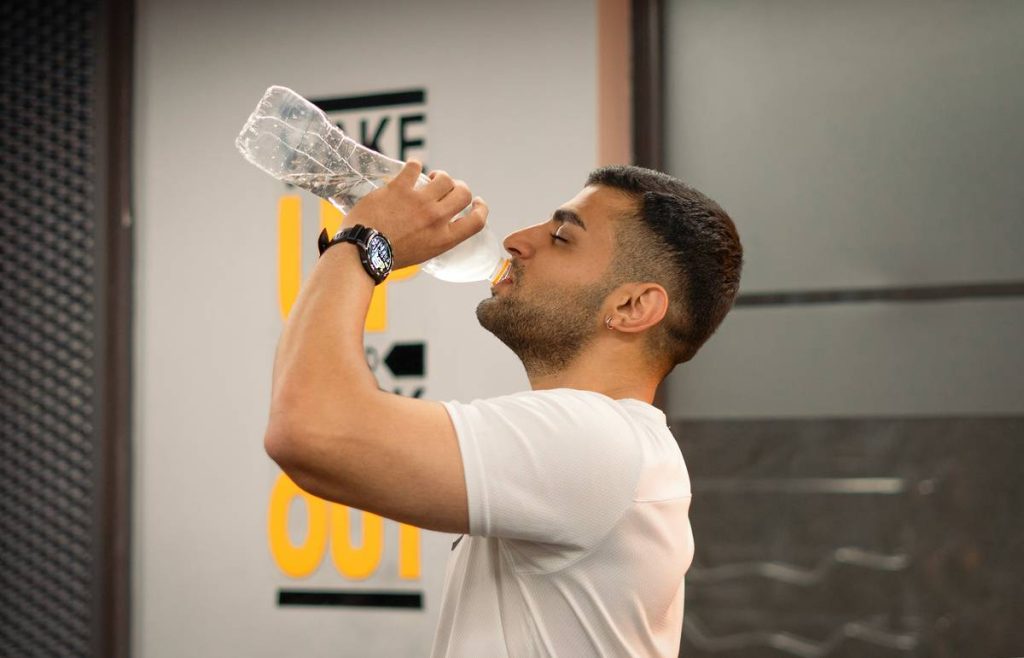
- Hydrate Like It’s Your Job: Even 2% dehydration impairs recovery. Add electrolytes if you sweat heavily.
- Walk Daily: 30 minutes of brisk walking boosts circulation and lymphatic drainage—nature’s anti-inflammatory.
Terrible Tip Disclaimer: “Just work out harder tomorrow to ‘sweat out’ the soreness.” Nope. That’s how you tear a rotator cuff while reaching for cereal.
Rant Corner: My Pet Peeve
Instagram fitness gurus showing 50-year-olds doing kipping pull-ups and handstand push-ups like it’s nothing. Bro, your collagen isn’t what it was in 2003! Sustainable strength > viral stunts. Period.
Real Results: Men Over 40 Who Prioritized Recovery
Dave, 52, came to me with lower back pain and zero energy. He’d been grinding through CrossFit 5x/week. We shifted to a recovery-first full-body routine: 2x/week, 45-minute sessions, heavy on tempo work and post-session breathwork.
Results after 12 weeks:
- Lost 18 lbs of fat
- Added 12 lbs of lean mass (via DEXA scan)
- Back pain gone
- Sleep score improved from 68 → 89 (Oura Ring data)
“I finally stopped fighting my body,” he told me. “Now I train *with* it.”
FAQs: Recovery Over Fitness Full Body Workout
Can I still build muscle with a recovery-focused approach?
Absolutely. Muscle growth happens during recovery—not in the gym. By optimizing rest, nutrition, and stress management, you create the hormonal environment (higher testosterone, lower cortisol) needed for hypertrophy.
How often should men over 40 do full-body workouts?
2–3 times per week is ideal. This allows 48–72 hours between sessions for full systemic recovery. More frequency usually leads to accumulated fatigue, not gains.
Is cardio bad for recovery?
No—but context matters. Low-intensity steady state (LISS) cardio like walking or cycling aids recovery. High-intensity interval training (HIIT) adds stress. Limit HIIT to 1x/week max if your goal is strength and joint health.
What’s the #1 recovery mistake men over 40 make?
Ignoring sleep and stress. You can’t out-train poor sleep or high cortisol. Fix those first—then worry about rep schemes.
Conclusion
For men over 40, “recovery over fitness full body workout” isn’t about taking it easy—it’s about training smarter so you stay strong, mobile, and injury-free for decades. The goal isn’t to look like you did at 25; it’s to feel better than most guys half your age.
Start small: add 10 minutes of post-workout mobility tonight. Hydrate. Sleep like your gains depend on it (they do). And remember—your strongest asset isn’t your bench press. It’s your ability to show up consistently, year after year.
Like a Nokia 3310, durability beats flash every time.
Sore knees hum
Recovery’s quiet rhythm—
Gains rise in stillness.